


Large-scale Microsoft Teams and Town Hall events raise the stakes on technical readiness. A stalled stream or a confused presenter reads differently in front of 5,000 people than it does in a team meeting of ten. This guide breaks down what actually goes into preparing one of these events, from format selection through live-day troubleshooting.
How Do You Prepare for a Large-Scale Microsoft Teams or Town Hall Event?
Preparing for a large-scale Microsoft Teams or Town Hall event comes down to four steps: choosing the right format, assigning and communicating roles before setup begins, running at least one full rehearsal from presenters' real locations, and confirming your licensing tier and network readiness with an eCDN load test in advance.
Technical Challenges for Large-Scale Teams Events
The challenges organizers face when creating large-scale Teams events center around three core elements: Teams production setup, licensing and capacity, and network stability.
Choosing the Right Teams Event Format
Teams Meetings, Webinars, and Town Halls each have distinct settings, and a default configuration may not align with your event goals, such as engagement tools, Q&A moderation, or breakout sessions. Selecting the right format sets the foundation for everything that follows.
Selecting the correct Teams experience sets the foundation for everything that follows:
Teams Meetings
Collaborative; everyone can talk. Best for smaller, interactive groups. Supports 1,000 fully interactive attendees, with 10,000 additional view-only participants.
Teams Webinars
Structured, registration-enabled, with audience engagement tools built-in. Supports up to 3,000 interactive attendees, and 10,000 view-only under Teams Enterprise.
Teams Town Halls
Broadcast-style; designed for large scale, one-to-many communications like company-wide announcements. Same Teams Enterprise capacity as Webinars (3,000 / 10,000 view--only), with Attendee Capacity Packs extending reach to 100,000. For audiences beyond 20,000, Microsoft recommends engaging Teams Events Services directly.
For large-scale broadcasts, choose Town Hall. It provides producer-level controls, Q&A management, on-demand recording playback, and Microsoft eCDN support, and higher capacity options through Attendee Capacity Packs.
For a full breakdown of when to use each format, see our guide, Mastering Large Virtual Events on Teams.
Understanding Roles and Permissions
When setting up a Town Hall or Webinar, roles determine access and responsibilities. Poor communication surrounding an individual's assigned tole and what permissions they have, such as starting/stopping the event's stream and fielding audience questions/moderation, can create unwelcome chaos during the live event.
Role-based permissions set the appropriate level of access for each user, which protects security and prevents issues once the event goes live.
- Organizer - Owns the event setup, scheduling, and follow-up
- Co-organizers - Manage presenter permissions, Q&A, and reporting
- Presenters - Deliver content and appear on screen
- Attendees - View the event and engage through Q&A, polls, and reactions
Managing Diverse Presenter Environments
Different devices, internet speeds, and camera setups can affect audio and video quality. Pre-event checks and rehearsals with presenters reduce surprises and create a consistent attendee experience.
Devices, Rooms, and Presenter Setup
- Wired internet where possible.
- Quality mic and camera. This one matters more than people expect.
- A dual screen setup for moderators and organizers to monitor slides and Q&A simultaneously.
- If using a Teams room, confirm compatibility and permissions with your presenter(s), and validate links at least 24 hours before the event.
Presenter orientation and guidance matters! Walk presenters through joining as a presenter, screen sharing, and checking audio lemvels. Have IT validate permissions well ahead of the event's start time. Practice access, presentation materials, and understand their preferences for interactive elements (such as Q&A) with them in advance.
Dry Run and Rehearsals
At scale, rehearsals aren't optional. Schedule a full mock event with identical settings. Have presenters join from their actual locations, run through transitions, and Q&A, and have IT monitor event performance in Teams' Call Quality Dashboard (CQD).
Capacity, Licensing, and Network Stability
Capacity and Licensing
Confirm your licensing tier before you build your event plan. Teams Enterprise governs capacity for large-scale events, including the interactive and view-only limits above, with Attendee Capacity Packs available to extend reach beyond 10,000 view-only attendees.
Network Planning and eCDN
Bandwidth can make or break your event. Work with your IT team to implement an enterprise content delivery network (eCDN), and run a silent load test that mirrors your expected audience size to catch network strain before it becomes a problem.
Explore our infographic: The Anatomy of a Technically Ready Teams Event:
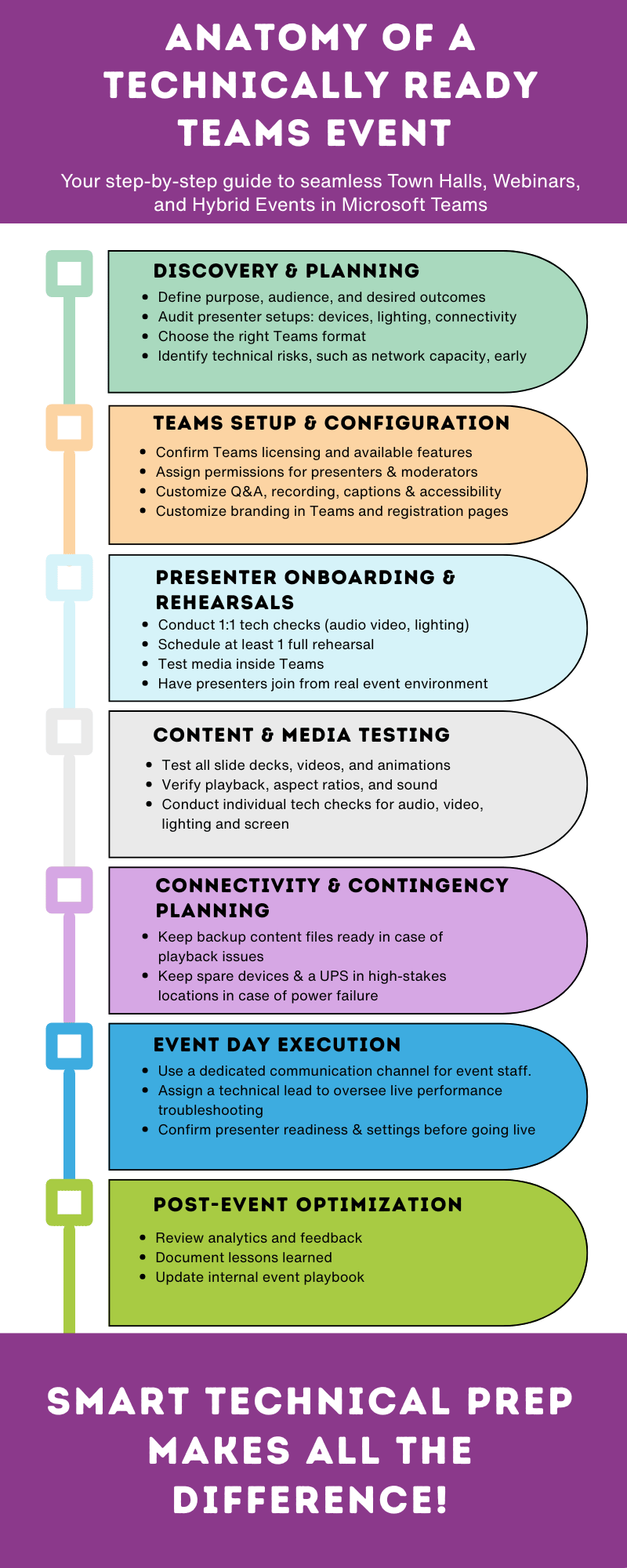
Building Your Microsoft Teams Technical Plan: Step-by-Step Framework
A successful Teams Town Hall or Webinar doesn’t just happen by chance; it’s engineered through preparation and collaboration. Here's a consolidated breakdown of each step:
Step 1: Technical Discovery & Consultation:
- Define the event's purpose, audience, and desired outcomes.
- Audit presenter setups: devices, lighting, and connectivity.
- Choose the right Teams format.
- Identify risk factors, including network capacity, presenter connectivity and permissions, audio/video equipment variation, and potential power disruptions. Document mitigations and contingency plans early.
Step 2: Microsoft Teams Setup & Configuration
- Adjust and communicate permissions for presenters, attendees, and moderators.
- Customize Q&A, recording, captions, and other accessibility considerations.
- Add branded visuals: intro slides, lobby messages, and lower thirds.
- Integrate registration or analytics tools to track attendance and engagement.
Step 3: Presenter Onboarding and Rehearsals:
- Conduct individual tech checks for audio, video, lighting, and screen sharing. Assume nothing about their comfort level with the platform.
- Schedule at least one full rehearsal to test timing, transitions, and flow.
- Encourage presenters to join from their real event environment.
Live Event Day: Managing Risk and Real-Time Issues
- Keep backup content files ready in case of playback failure.
- Use a dedicated communication channel for production staff.
- Assign a technical lead to oversee live performance troubleshooting.
- Confirm presenter readiness and platform settings before going live.
The ROI of Large-Scale Event Preparation
Technical readiness ultimately drives engagement and builds long-term trust. When the mechanic work, participants stay focused on your message instead of the platform.
The Benefits of a Solid Readiness Plan
- Higher attendee satisfaction and focus.
- Fewer live-day disruptions.
- Confident, well-prepared presenters .
- Consistent brand experience across all sessions.
FAQ: Large-Scale Microsoft Teams Events
1. What roles do I need to assign for a large Teams or Town Hall event?
Four roles matter: organizer (owns setup, scheduling, and follow-up), co-organizer (manages presenter permissions, Q&A, and reporting), presenters (deliver content on screen), and attendees (engage through Q&A, polls, and reactions). Assign these early and communicate each role's permissions before the event.
2. How many rehearsals do I need before a large Teams or Town Hall event?
Rehearsals aren't optional at this scale. Schedule at least one full mock event using your actual settings, have presenters join from their real event locations, run through transitions and Q&A, and have IT monitor performance through Teams' Call Quality Dashboard.
3. What is an eCDN and do I need one for a Teams event?
An eCDN (enterprise content delivery network) places proxy or cache servers on your company's LAN or WAN to handle video traffic. It improves video quality, reduces network strain, and lowers bandwidth costs. Run a silent load test that mirrors your expected audience size before the event to confirm your network can handle it.
4. How far in advance should I start technical preparation for a large Teams event?
Start with a discovery and consultation step that defines format, roles, and risk factors, then move into Teams configuration, presenter rehearsals, and permission validation at least 24 hours before the event. Events with multiple presenters or complex staging need more lead time for rehearsals specifically.
5. What happens if something goes wrong during a live Town Hall?
Keep backup content ready in case of playback failure, use a dedicated communication channel for production staff, and assign a technical lead to oversee real-time troubleshooting. Confirm presenter readiness and platform settings immediately before going live.
Plan Your Next Large-Scale Event with Confidence
Large-scale Microsoft Teams and Town Hall events succeed when preparation meets precision. With the right setup, thorough rehearsals, clear documentation, and prepared presenters, you build a reliable event and a confident, connected audience.
EventBuilder's event experts help design, test, and execute large-scale Microsoft Teams events with care and technical precision. We hand the behind-the-scenes complexities so you can focus on delivering value.
Ready to Plan Your Next Large-Scale Event?
Connect with us to create your fully-customized technical readiness plan!

Download Your Free Resource:
The Ultimate Toolkit for Large-Scale Virtual and Hybrid Events on Microsoft Teams
Get our whitepaper that walks you through every stage from technical setup and presenter prep to post event analytics and engagement tracking.
Disclaimer: This article was created with some help from AI, but thoroughly edited, revised, reviewed, and fact-checked by a living, breathing, coffee-drinking human writer.
How to Run a Simulated Live Webinar in Microsoft Teams
Microsoft Teams Webinar Engagement Guide: Step-by-Step
No Comments Yet
Let us know what you think